Disciplines – Color Therapy
Feng Shui and Colors
If colors are the first thing that catch your eye in a place, in a piece of clothing, in a car, in an accessory, or even in what you put on your plate, then you are in the right place! The love for harmonious color schemes is definitely the leitmotif of my life. Since I was a child, I have been fascinated by them, but as I grew up, I realized that for me, colors are like a symphony of lights and sounds. We know that it is light that allows our eyes to perceive the color of objects, that is, what the objects themselves reflect as a frequency. And I have learned to use Feng Shui and colors for my well-being in every aspect of life.
What will you find out?
In this section, you will discover that color has the power to completely change our emotions and, consequently, our physical state.
Colors, like Feng Shui, have always been a part of my life. I remember various episodes from when I was a girl: my mom enjoyed knitting, but she chose colors that didn’t exactly harmonize with my palette. One of her “favorite works” was a forest green sweater. She was immensely proud of it because she loved greens, but I absolutely detested them. Another time, while walking, I noticed a lady with a delicate demeanor wearing beautiful red shoes. I was just a child, but in an instant, I had noticed all the details of her outfit, especially the shoes. I was certain there was an explanation for this.
As I grew up, I understood which colors were part of my palette, which ones flattered me, and, most importantly, I became aware that I chose the colors of my clothing based on my emotional states. The next step was learning to use them to achieve results in my life and to help the more than three hundred clients who have relied on my expertise in this field. To confidently face a job interview, to be successful in an important meeting, to be supported by the color of furnishings, to achieve your goals and dreams!
The Beginning of the Journey Between Feng Shui and Colors
Twelve years ago, I began my journey toward greater self-awareness. I started studying an ancient discipline that had fascinated me for a long time because it might provide answers to one of my unresolved questions: Do the environment and surroundings influence human beings? And, more importantly, how can we determine if a home contributes to the well-being of its occupants?
As a result, I became a holistic practitioner specializing in Feng Shui and color. One element that, among many others, clearly influences the inhabitants of a house and their well-being is the choice of colors for the walls, furniture, and accessories. Consequently, I pursued a series of advanced courses because, at that point, it was no longer sufficient for me to simply recommend colors for my clients’ homes. I became increasingly fascinated by the discovery that each of us has colors we can wear to make a great impression in certain official situations, as well as colors that help to “boost our mood.”
Feng Shui and Colors are based on Traditional Chinese Medicine.
Traditional Chinese Medicine (TCM) is a comprehensive discipline encompassing various branches, each rich in symbolism from centuries of observing human interactions with nature and their mutual influences.
Feng Shui views the home as an extension of our body, with reflex points in our living spaces corresponding to our organs. By adjusting our home environment, we help our body achieve balance and harmony, akin to how acupressure in Foot Reflexology stimulates specific points on the foot, or Acupuncture uses needles to activate certain points.
Traditional Chinese Medicine has long acknowledged the connection between Feng Shui, colors, and organ function, a relationship recognized for over 5000 years.
In the comprehensive discipline of Chinese medicine, there is a significant correlation between specific organs, emotions, Feng Shui, colors, and meridians. This holistic approach explores how these elements interconnect to impact human health and well-being.
Practitioners of Chinese medicine use colors, similar to Feng Shui, to balance emotions and restore the body’s natural functions. Incorporating a variety of colors in your diet, aligning with their seasonal availability, and integrating specific colors into your clothing or interior design can enhance health and support the organs associated with those colors.
The five elements or phases of Chinese energetic theory play a crucial role in understanding this correlation. These elements relate to various aspects of life, including organs, seasons, times of day, spatial directions, phases, colors, shapes, sensory organs, and both solid and hollow organs, along with their corresponding emotions.
Can Feng Shui and colors really help us feel better? If so, how?
Color communicates with us on a subtle level, and by understanding its effects, we can use it more intentionally. For instance, the impact of wearing a colored item varies depending on whether it’s on the upper part of the body (head and neck), the middle part (torso), or from the waist down.
Our mind is divided into the conscious, subconscious, and unconscious, with each corresponding to one of these three body sections. The “reflex point” of our conscious mind is the upper body. Here, we choose colors based on personal preference or attraction, though what we need may differ. Sometimes, a color we dislike could be precisely what we need to overcome an emotional block.
The subconscious aligns with the torso, where unrecognized thoughts, impressions, and memories reside. The area from the waist down represents the unconscious, containing beliefs, emotions, desires, and instincts beyond our deliberate control.
Often, solutions to our discomfort are found in this lower body area.
This is why I feel such awe when I see someone confidently wearing a pair of red shoes.
But how does our body actually 'perceive' colors?
Color is the result of a process carried out by our brain.
It originates from the sensory perception that the retina, the nerve tissue in the eye connected to the optic nerve, sends to the brain.
The retina contains photoreceptors, which are nerve cells of different shapes called rods and cones. These cells respond when stimulated by light. Cones are responsible for color vision, while rods are responsible for vision in low light conditions. Therefore, color actually arises from electromagnetic radiation: light.
Electromagnetic radiation and objects themselves are inherently colorless. However, the eye perceives them as having a particular color due to the way objects reflect and absorb different parts of the light they receive.
The color that the human eye perceives is the part of the light spectrum that is not absorbed by the object.
Therefore, color is a SENSATION GENERATED by the human eye. It is not a physical property, but, like the sounds of ancient languages on Earth, colors have become deeply ingrained in us over the millennia.
Thus, the light that makes bodies visible... but how does it work?
Light is the physical agent that makes objects visible and is measured in:
- Brightness or Intensity
- Color or Frequency
- Polarization or Vibration Angle
Visible light to the human eye is a portion of the electromagnetic spectrum, approximately between 380 and 760 nanometers in wavelength.
Different wavelengths are perceived as colors, ranging from red (with longer wavelengths and lower frequencies) to violet (with shorter wavelengths and higher frequencies). Frequencies outside this visible spectrum are not detectable by the human eye and are referred to as infrared (lower frequencies) and ultraviolet (higher frequencies).
Follow me on Facebook
Follow me on Instagram
YouTube
Follow me on YouTube
FOLLOW MEWhen did the study of colors 'begin'?
Explore the captivating history of color with me! To me, delving into the world of color feels like moving from black and white to stunning 4K technology.
Our journey begins with the Sicilian philosopher Empedocles (circa 490-430 BC), who first explored the concept of color. He compared the creation of life to painting, positing that everything in existence is made up of four fundamental elements: earth, air, water, and fire. Just as a painter uses a limited palette to create an entire world, these elements form the basis of all things.
Next, we turn to Hippocrates, the father of medicine (460-370 BC), who theorized that the human body contained four colored fluids, or humors: red blood, yellow bile, black bile, and blue phlegm. These humors correspond to Empedocles’ four elements: fire, earth, air, and water. Galen (130-200 AD) later associated these colors and humors with four temperaments: sanguine (blood), choleric (yellow bile), melancholic (black bile), and phlegmatic (phlegm). While this theory is outdated, it parallels the five elements in traditional Chinese medicine.
Finally, Aristotle (384-322 BC) proposed that all colors stem from white and black, with blue and yellow being the primary colors. This early theory set the stage for our modern understanding of color.
Join me as we unravel the rich tapestry of color history and its impact on our world!
And how did we arrive at 'modern' knowledge about colors?
Approximately 2,000 years after Aristotle’s time, Isaac Newton made a groundbreaking discovery in 1676. Using a triangular prism, Newton experimentally demonstrated that white sunlight disperses into the full spectrum of colors.
In this famous experiment, Newton explored the behavior of sunlight passing through a transparent prism. He directed sunlight through a slit, which then entered a prism and was projected onto a white screen positioned a few meters away. Due to the phenomenon of refraction, an elliptical image appeared on the screen, which Newton named the “spectrum” (derived from the Latin word “specere,” meaning “to look” or “to appear”). This spectrum showed a gradual transition of colors from a slight blue tint at one end to a red tint at the other.
According to the law of refraction, light should bend at a specific angle when transitioning from a less dense medium to a more dense one, resulting in a circular rather than elliptical spectrum. Sir Isaac Newton’s measurements of the angles of incidence and refraction revealed that sunlight consists of rays of different colors, each with a unique refractive index. He found that the elliptical shape of the image on the screen was due to the overlapping of these color images. Only the extreme colors, red and blue, were visible separately; when mixed, the visual perception of the resulting color differed from the individual colors.
In essence, color is a subjective sensation produced by an objective physical stimulus: light.
How does the perception of colors as a physical phenomenon enter the realm of emotions?
Goethe concluded that color resulted from the interaction between white and black, through a process in which white was contaminated by black. He deserves credit for being among the first to explore how contexts alter color sensations. His work made it clear that color perception is a way in which the organism, through its visual system, responds to external light stimuli.
I would now like to conclude this historical overview, which has always deeply fascinated and excited me, with the great German psychologist Carl Gustav Jung (1875-1961). I owe him the entire journey that began 12 years ago, his studies, his insightful students, and a host of exceptional psychologists whose works I highly recommend reading.
Colors Feng shui and behavior
Jung explored the Hippocratic theory of the four humors and associated each color with a personality type to explain human behavior through these colors:
- Cool Blue: Impartial, objective, detached, analytical.
- Earthy Green: Calm, tranquil, soothing, reassuring.
- Sunny Yellow: Cheerful, comforting, lively, enthusiastic.
- Fiery Red: Positive, determined, bold, assertive.
It is clear that we all have aspects of each temperament, and depending on the proportions of these types within us, we are more significantly aligned with the energy of one color over another.
Believe me, from now on your world will seem even more “colorful” and captivating!
So, let’s analyze the primary colors and what they represent, starting with how they are formed.
Introduction to Feng Shui and Colors
The three primary colors are those from which all other colors are derived:
- Blue, which is predominantly found in nature (Water and Sky).
- Red.
- Yellow.
From these three primary colors, we obtain the secondary colors:
- Green: created by mixing blue and yellow.
- Purple: created by mixing blue and red.
- Orange: created by mixing yellow and red.
Among the possible pairs of primary and secondary colors, some are referred to as complementary because they enhance and strengthen each other’s brightness. In this regard, purple is complementary to yellow, green is complementary to red, and orange is complementary to blue. Notice that the primary color is the one missing in its complementary pair.
In this brief overview, we also encounter tertiary colors, which are created by mixing a secondary color with a primary color:
- Turquoise: created by mixing blue and green.
- Magenta: created by mixing red and purple.
- Gold: created by mixing yellow and orange.
- Olive: created by mixing yellow and green.
- Coral: created by mixing red and orange.
- Royal Blue: created by mixing blue and purple.
Color temperature
Colors have a “temperature” and are categorized into Warm, Cool, and Neutral based on the sensations they evoke, the images they conjure, and the situations they remind us of:
Warm Colors: Reds, yellows, and oranges are bright and associated with sunlight and warmth. These colors have a stimulating effect, increasing muscle activity, blood pressure, breathing rate, and heart rate. For example, red stimulates the sympathetic division of the autonomic nervous system, triggering the Fight or Flight response.
Cool Colors: Blues, purples, and greens evoke images of coolness, such as ice, the sea, and the sky. Cool colors have a calming and relaxing effect, lowering blood pressure and respiratory rates. Blue, in particular, affects the parasympathetic division of the autonomic nervous system, promoting rest and relaxation.
Green: Positioned at the center of the light spectrum, green represents a balance between warm and cool colors. It provides a stabilizing effect, enhancing overall wellness and acting as a sedative for the nervous system.
Understanding the impact of color temperature can help you create more harmonious and effective environments, whether for your home, workspace, or personal space.
 Feng shui
 iridologia
 naturopatia
 cristalloterapia
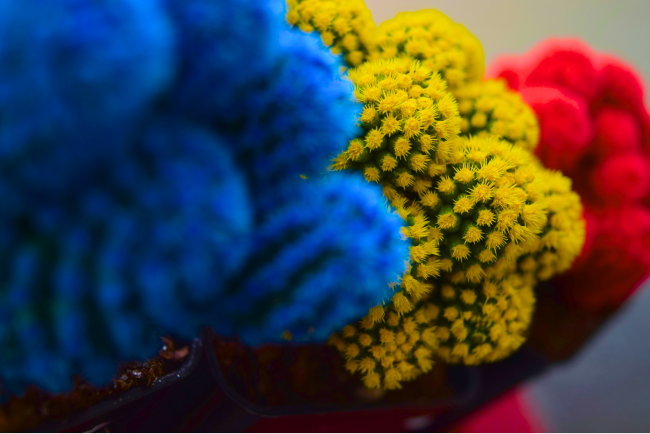
PRIMARY COLORS:
BLUE:
- Blue is associated with water and the sky; it symbolizes calm, peace, and relaxation.
- Physically: it soothes the nervous system, is refreshing and relaxing, and helps to reduce heart rate, respiratory rate, and blood pressure.
- Psychologically: it relaxes and calms the mind.
- It is also the color of communication and represents paternal protection. However, when used excessively or by those in need of balance, it can be linked to melancholy and may precede depressive states.
RED:
- Red is associated with blood, life, instinct, desire, and sexuality. It represents both passion and war. Red is a color that attracts attention, which is why it is used in danger signals and stop signs (traffic lights).
- Physically: It stimulates and excites. Red affects the heart by increasing the heart rate and, consequently, blood circulation; the lungs, helping to alleviate coughs and mucus congestion; and the muscles, by increasing tension.
- Psychologically: It enhances willpower and courage.
- Red should be avoided in the presence of inflammatory diseases, particularly heart conditions.
YELLOW:
- Yellow is associated with sunlight and represents extroversion, outward projection, and a focus on the future. It symbolizes happiness and laughter.
- Physically: yellow aids digestion, increases muscle tone, stimulates motor nerve fibers, enhances reflexes, and improves perception.
- Psychologically: yellow stimulates brain activity, particularly in the left hemisphere (the seat of rationality). It has a positive effect on mood, enhances concentration, and fosters the desire to learn.
SECONDARY COLORS
ORANGE:
- It is associated with cheerfulness, well-being, joy, and also wisdom.
- Physically: It has an energizing effect without being overly stimulating. It regulates respiratory activity, stimulates appetite, supports the function of endocrine glands (especially the thyroid), and benefits cardiac function.
- Psychologically: It restores enthusiasm and a zest for life.
GREEN:
- It is the color of nature and affects stability and balance. Light green represents regeneration and renewal, while dark green is associated with resilience. It symbolizes harmony and aids in decision-making.
- Physically: It harmonizes and balances tissues, promoting overall well-being.
- Psychologically: It has a calming and relaxing effect.
VIOLET:
- Violet is at the extreme end of the visible color spectrum, close to ultraviolet radiation. It is the color of the spirit, associated with magic and the silence that fosters intuition. It represents the balance between the masculine and feminine and is linked to imagination.
- Physically: Violet stimulates spleen activity, the formation of white blood cells, skeletal development, and helps regulate blood pressure and lymphatic circulation.
- Psychologically: It soothes nervous and mental disturbances and is used to address irritation and insomnia.
ROYAL BLUE (INDIGO):
- It is the color of the starry sky on a moonless night and represents the cosmic energy and intuition that support the meditative process of deep reflection. This color was created in Ancient Egypt by mixing lapis lazuli with other blue, azure, and white pigments.
- Physically: it is cold, anesthetic, and hemostatic; it purifies the blood and tones the muscles and nerves.
- Psychologically: it is highly relaxing due to its high vibration and enhances understanding. It supports judgment and aids in mental concentration.
TERTIARY COLORS
TURQUOISE:
- It is the color of communication, specifically the creative communication of the heart connected to feeling.
OLIVE GREEN:
- It is the color of the feminine energy that guides from the heart, resolves bitterness, and releases fear.
GOLD:
- It is the color of wisdom, deep joy, and profound knowledge.
CORAL:
- It is the color that heals past traumas, including those from one’s family of origin.
MAGENTA:
- It represents divine love and love found in the small things. It is the color that nurtures those who care for others and expresses a strong need for love.
PINK:
- It is the color of feminine creativity, compassion, self-acceptance, and healing from suffocating love. I refer to it as the color of cuddles.
WHITE or LIGHT:
- It represents reflected light, clarity, the need for illumination, and helps in understanding suffering.
At the first color course I attended after the Feng Shui classes, I showed up in a black-and-white optical-effect dress, paired with a magenta shirt, magenta shoes, and topped off with a magenta scarf. Our instructor asked us to share our feelings about each color, which she noted on the board. When it was time to discuss magenta, she looked at me with a smile and said, “Magenta, the root of ruby, is the color of those who show care in the small things of everyday life, like mending little dresses.”
I felt a pang in my heart because, just the night before, I had been sewing ribbons onto my daughters’ dance shoes. It’s remarkable how much a color can reveal about a person. Adding color to our lives adds layers of emotion and meaning!
- And now try to imagine a nice plate of carrots, with some purple cabbage and fennel cut so that you catch the pattern….
- Try opening your wardrobe and feel the emotions you feel when you look at your coloured garments and the black, grey, brown ones that comply with society’s rules…
- Try to imagine a steel kitchen or a chabby chic kitchen from whose window you can see the sea or a tree-lined park… or a cream-coloured sofa with golden cushions… do you feel the difference too?
- Try to imagine a lapis lazuli pendant or a ruby ring
I assure you, your life in colour will radically change your physical and emotional state, bringing you peace, harmony and well-being! Try to feel the color of the lavender or of the Orange Flowers…….
Then call me!